Getting the Heat Right in Glass Bending
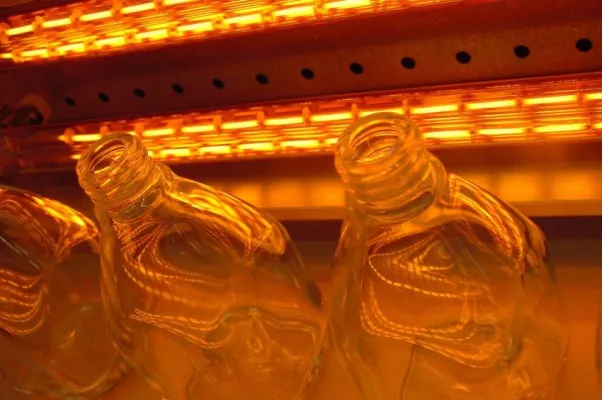
Selling a reflector is the easy part. The real work—the actual engineering—happens when you’re staring at a heating imbalance on a bending line and trying to fix it. When you’re using shortwave infrared lamps, that reflector does way more than just “bounce light.” It’s your main tool for controlling heat. If you don’t get it right, you’ll end up with hot spots, and your glass won’t hit that sweet spot where it softens perfectly.
It’s all about where the heat lands
Think about it: a standard lamp throws energy in every direction. If you don’t have a precision reflector, you’re basically paying to heat up your own machine frame. That’s just wasted money. We use high-purity aluminum or gold coatings to push that energy back into the glass. But here’s the tricky part: the curve has to be spot on. If the arc is off by even a few millimeters, the heat hits unevenly. That’s how you get those annoying optical distortions in the finished piece.
Gold vs. Aluminum: The trade-off
Gold-coated reflectors are the top tier. They reflect infrared energy beautifully and don’t blink when things get hot. The downside? They’re pricey and you can’t just scrub them with a rough cloth—they scratch easily. For most shops, anodized aluminum is the way to go. It’s a workhorse. It can take a beating in a loud, messy factory and it’s a breeze to clean. You just have to decide if the extra energy efficiency of gold is worth the delicate nature of the material.
Why we need to see your floor
You can’t just pick a thermal solution out of a catalog and hope for the best. Every machine is different. The footprint, the way the air moves around the glass—it all changes the game. That’s why we prefer to come to you and run a thermal scan. We’re looking for those “cold zones” where the reflector geometry isn’t overlapping. It sounds tiny, but shifting the gap between the lamp and the reflector by just 2mm can totally change the heat intensity on the glass surface. We aren’t just shipping you a part in a box. We’re making sure your glass stops cracking or sagging.