
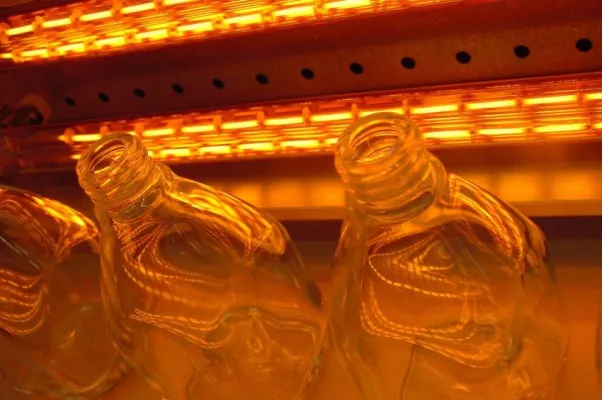
Why Your Glass Keeps Cracking (And Why It’s Probably Your Lamps)
Ever wonder why one batch of glass comes out perfect and the next is a total disaster? Usually, it comes down to heat. When you’re running a line, a tiny 5% dip in lamp output might not look like much on a chart. But in the real world? That’s the difference between a solid part and a pile of shards. I see it all the time: engineers spend hours obsessing over furnace settings, but the real problem is that their infrared lamps aren’t actually putting out the same amount of heat.
The Problem with “Generic”
If you want to stop that batch-to-batch headache, you need lamps that actually behave. Most off-the-shelf IR lamps are all over the place. One might run hot, while the one right next to it is barely lukewarm. That creates these invisible stress points inside the glass. Then, as the part cools down, it just snaps. We fix this by tightening the specs on wattage and radiant flux. We make sure every single lamp in your array is pushing out the same energy density. No surprises.
Real Talk for the Shop Floor
We use high-purity quartz envelopes. Why? Because we want the shortwave radiation to hit your glass, not get trapped inside the lamp. We also obsess over the filament geometry. By centering the coil perfectly, we kill off those annoying “cold spots” at the ends of the tube. You can swap these right into your current racks, but here’s a heads-up: check your reflectors first. If they’re pitted or oxidized, they’re basically fighting against you. Even the most consistent lamp in the world can’t fix a mirror that’s gone cloudy.
The Trade-off
When your heat is predictable, you can tighten your annealing windows. It makes the whole process feel… smoother. You know exactly what’s happening across the entire batch. But there’s a catch. If you try to shave off every possible second of cycle time by cranking these lamps to the absolute limit, you’re going to burn out the filaments faster. It’s a balancing act between speed and your replacement schedule. One last tip: keep an eye on your voltage drop. If the lamps are being under-driven, you’re losing that consistency we built into the hardware, and you’re right back where you started.