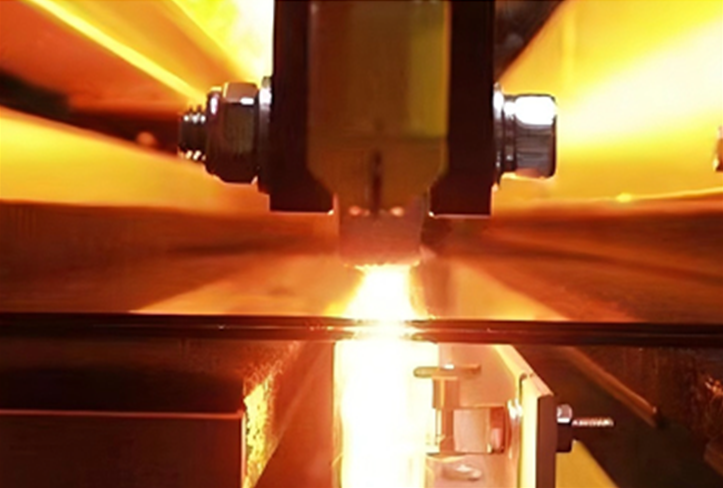
On a tempering line or a high-speed lamination press, heating isn’t a background detail—it sets your cycle time, your opticals, and your scrap rate. If the heaters can’t hit setpoint fast, the whole line sits and waits. If the thermal field is off, you get warp, stress marks, and rework you can’t afford. We built our short wave quartz infrared lamps to cut through that drag. What matters under the hood Short wave infrared (0.78–1.5 μm) dumps energy straight into the glass—absorption, not heating the air. The quartz envelope stays cool, so you’re heating the product, not the plant. Response is near-instant: full power in seconds, ramp-down fast when the dwell is done. In practice, that gives you tighter control across the sheet—fewer hot/cold spots, and profiles that repeat shift after shift. Why it fits the work we do In tempering, the quench is only as good as the heating that comes before it. These lamps get up to temperature quickly, so you can tighten the heat-soak window and keep output stable without chasing drift. In EVA/SGP/PVB lamination, rapid, even heating improves adhesion uniformity and cuts down on bubble defects. And because the heat goes where it’s needed—direct radiation—energy use drops. Waste heat in the plant falls, and peak demand eases. That shows up as lower kWh per piece and a steadier rhythm on the line. The practical details you can’t skip These are high-intensity lamps. Match the reflectors and keep proper thermal clearances; otherwise you’ll get localized overheating. Clean power and solid connections matter, too—voltage imbalance shortens life and can make output drift. Plan mounting and wiring to fit the existing footprint, and make sure the control strategy can handle fast PID tuning. Set it up right, and you’ve got a heating method that’s fast, controllable, and far more efficient than convection-heavy systems.