
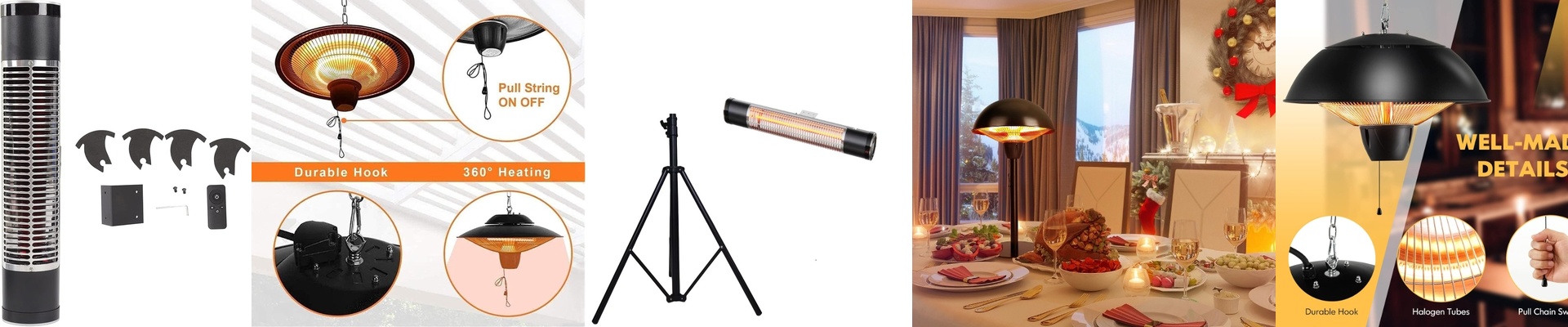

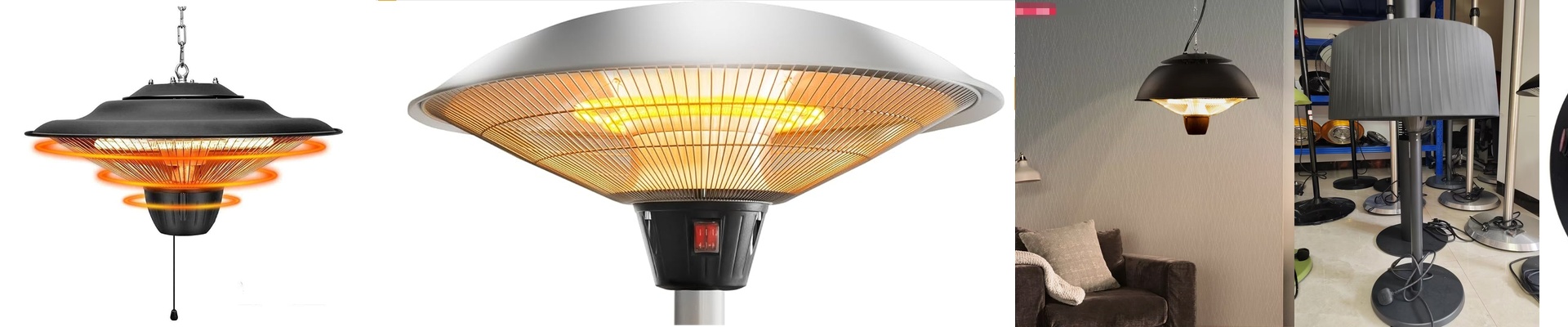
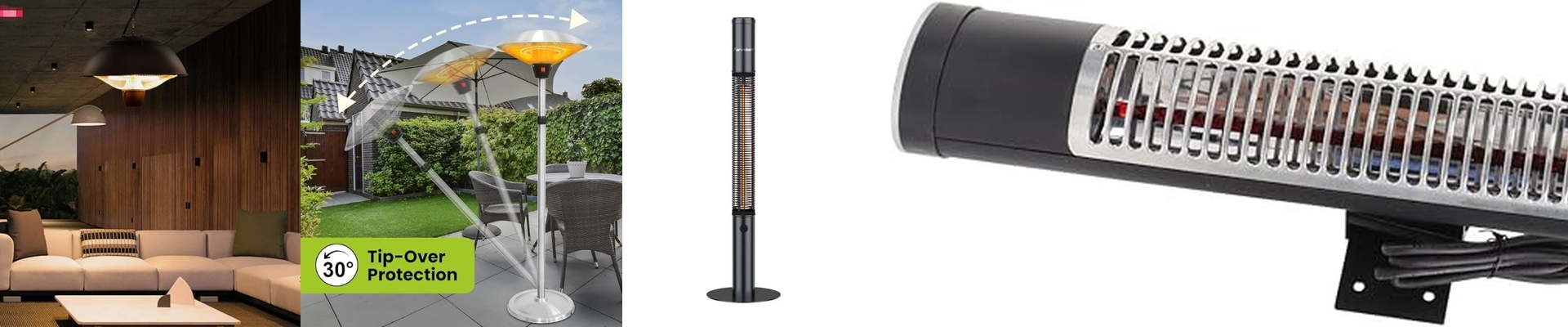

On the glass line, downtime and thermal drift are the two thieves of yield. One emitter underperforms in the tempering furnace, and you’re staring at uneven bow, optical distortion, or edge compression problems. A slow warm-up on the bending lehr stalls the whole cell. On the lamination line, surface temperature that isn’t consistent means bubbles, haze, and rework you can’t afford. The heating element isn’t a peripheral. It’s the control point of the process. We built our high-efficiency infrared emitter program around that reality. It’s engineered for plants that run hard, measure everything, and don’t have room for guesswork.
What matters, technically
The core is a short-wave infrared (SWIR) design, using a quartz envelope and a filament geometry matched to the job. The result is a fast-response, high-intensity heat profile that lines up with how glass absorbs heat, while wasting less energy heating air and equipment.
- Spectral output: Short-wave infrared, concentrated in the near-infrared band. That matches glass absorption, so you heat the surface quickly without overdriving the bulk.
- Response time: Full output in seconds, with a fast cool-down. In practice, that means shorter ramp cycles, tighter soak control, and repeatability that holds up shift after shift.
- Energy density: High power density in a compact form. You get more heat where you need it, in a smaller footprint, which helps with tight machine layouts and better thermal containment.
- Efficiency: Higher electrical-to-radiant conversion. The payoff is lower kWh per square meter of glass, and lower peak demand on the plant electrical system.
- Construction: Quartz envelope with industrial-grade seals and supports. The package is built for thermal shock, vibration, and the gritty environment of a glass factory.
- Control compatibility: Designed to work with standard industrial temperature controllers and power regulation schemes. You can keep your existing control logic and still tighten the process window. Numbers only matter when they translate into control on the line. With this emitter, you get predictable heat flux, a stable thermal field, and a process window you can count on.
Why it works where you run
Glass processing is a string of thermal operations, and each one has its own failure modes. In tempering, you need uniform, rapid heating to hit the tempering point without inducing thermal stress fractures. The emitter’s fast response and focused output help keep the surface temperature even. The payoff is more consistent compression, fewer optical defects, and fewer breakages during handling and installation. In bending, the trick is controlling the shape transition without thinning or wrinkling. The emitter gives you precise, localized heating, so you can smooth the sag profile and keep the transitions clean. That means fewer rejects from edge roll, shape deviation, or surface marks. In lamination, the key is bringing the interlayer to the right flow temperature quickly and evenly. Uneven heating shows up as bubbles, haze, or weak edge adhesion. The emitter’s rapid, controllable heat helps you hit the lamination window consistently, cycle after cycle. That cuts scrap, improves optical clarity, and keeps the line moving. In insulating glass sealing, you need to heat the primary and secondary seals without distorting the spacer or the glass. The emitter delivers targeted heat that minimizes thermal load on the rest of the unit, supporting a repeatable seal profile and better long-term durability. And in coating and drying, the emitter dries fast and uniform without overheating the substrate. That improves coating adhesion and reduces the risk of micro-cracking. Across all of these, the gains are the same: faster thermal response, tighter temperature control, and lower energy draw.
The practical details
Compatibility isn’t optional. We design the emitter to fit existing equipment footprints and mounting patterns, and we give you the interface details to make the swap without redesigning the machine.
- Drop-in replacement: The emitter is offered in standard lengths, diameters, and terminal configurations used across glass processing equipment. If you’re running a known OEM module, we match the mechanical and electrical interface so the swap is straightforward.
- Installation: Plan for proper alignment and support. The quartz envelope is tough, but it still needs clean mounting surfaces and the right clearance to avoid mechanical stress. Terminal connections should be torqued to spec to prevent hot spots.
- Thermal management: Keep reflectors clean and aligned. Reflectivity drops with contamination, and that directly impacts uniformity. A simple maintenance routine prevents drift in the heating profile.
- Electrical constraints: Confirm your supply voltage and phase configuration. The emitter performs best when the power supply matches the rated parameters. If your plant has variable voltage stability, factor in a stable feed or regulation at the machine.
- Operating environment: The emitter is built for heat and vibration, but like any heating element, it performs best when protected from direct contact with process residues and when housed in a controlled atmosphere. In areas with heavy dust or chemical vapors, additional shielding or purging may be needed. We don’t sell a one-size-fits-all solution. We sell a heating approach that fits your equipment, your process windows, and your production targets. If you’re running tempering furnaces, bending lehrs, lamination autoclaves, or insulating glass lines, the question isn’t whether you can use an infrared emitter. The question is how quickly you can integrate it and start seeing the difference in yield, cycle time, and energy draw.