
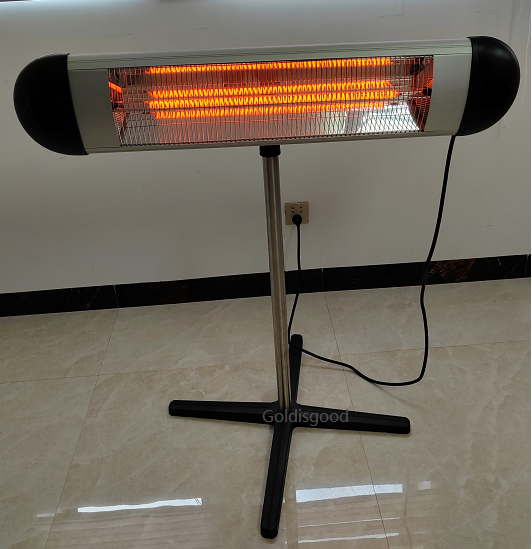
Why Your Waterproof Infrared Heaters Actually Fail (and How We Fixed It)
Here is a little secret about infrared table heaters: it’s rarely the heating element that gives up the ghost. Usually, the culprit is the lead-in wires. When you’re dealing with waterproof setups, there’s one spot where everything tends to go wrong—right where the electrical lead meets the quartz tube. Most companies just slap some basic glue on there. But here’s the problem: heat makes things expand and contract. Over time, that cheap glue cracks. And once it cracks, you’re in trouble.
The struggle with heat and moisture
When these heaters run hot, standard insulation starts to shrink and get brittle. It’s a recipe for disaster. Toss some moisture into the mix, and you get “carbon tracking,” which is just a fancy way of saying your heater will start shorting out randomly. We decided to stop playing that game. Instead of using basic adhesives, we switched to high-temp silicone gaskets and epoxy resins. Why? Because they actually move and breathe at the same rate as the quartz. They don’t fight the heat; they go with it.
The “Plug and Play” Trap
A lot of assembly lines just want to get the product out the door, so they “plug and play.” They ignore the tiny gap between the wire jacket and the seal. That gap is a killer. If there are air pockets in the seal, they expand when the heater hits peak temperature. This basically acts like a pump, sucking moisture deeper into the electrical connection. We make sure our seals are vacuum-tight. It feels more solid, and it means the airtight grip doesn’t just vanish the first time the heater gets really hot.
A couple of things to keep in mind
Now, there is a trade-off. Adding this kind of waterproofing adds a bit of bulk. Because of that, your heater might take a few seconds longer to reach full temperature compared to an open-lead version. It’s a tiny lag, but you’ll want to make sure your controller is tuned for it. One last tip if you’re installing these in a humid spot: look at your wiring. You can have the most perfect seal in the world at the tube, but if you’re using cheap PVC wiring for the rest of the run, it’ll still burn out. Do yourself a favor and use PTFE or silicone-coated leads. It matches the quality of the seal and keeps everything running smooth.